
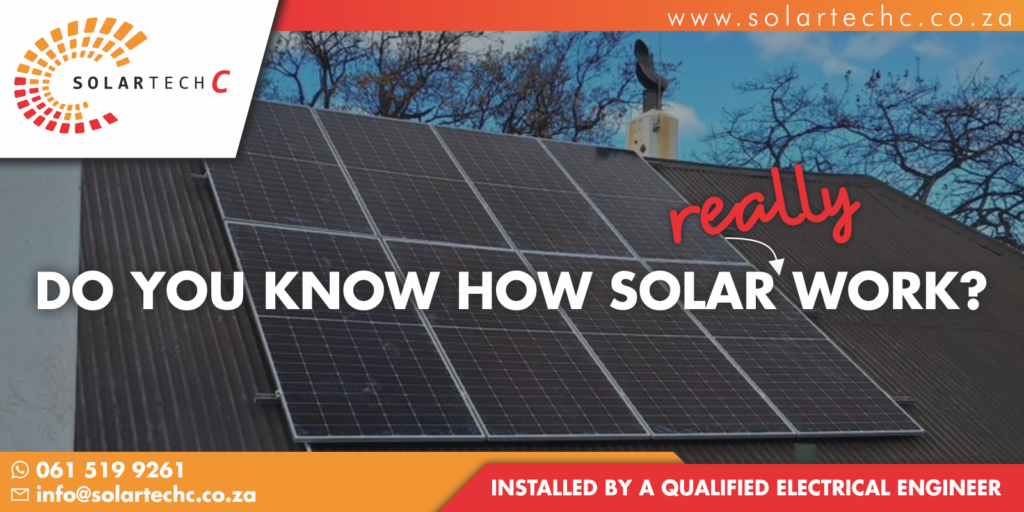
Solar panels, transform sunlight into electricity.
Although the fundamental workings of semiconductor physics are involved, I’ll lay down the procedure simply nonetheless:
𝗦𝘂𝗻𝗹𝗶𝗴𝗵𝘁 𝗮𝗯𝘀𝗼𝗿𝗽𝘁𝗶𝗼𝗻:
A solar panel is made up of several solar cells. Similar to the substance used in microelectronics, silicon is typically used to make these cells. Electrons in the silicon of a solar cell are excited when sunlight (photons) strikes the device.
𝗚𝗲𝗻𝗲𝗿𝗮𝘁𝗶𝗼𝗻 𝗼𝗳 𝗘𝗹𝗲𝗰𝘁𝗿𝗼𝗻 𝗙𝗹𝗼𝘄:
The excited electrons are subsequently forced out of their usual position and into another area of the cell, producing an electron “hole” and the subsequent generation of electron flow. These electrons are drawn to the front of the solar cell by design because of the way the cell is made (various silicon layers play different roles).
𝗘𝗹𝗲𝗰𝘁𝗿𝗶𝗰 𝗖𝘂𝗿𝗿𝗲𝗻𝘁 𝗣𝗿𝗼𝗱𝘂𝗰𝘁𝗶𝗼𝗻:
The passage of these excited electrons can be captured as an electric current by attaching conductive metal contacts to the top and bottom of the solar cell. Electricity in this case is direct current (DC).
𝗖𝗼𝗻𝘃𝗲𝗿𝘀𝗶𝗼𝗻 𝘁𝗼 𝗨𝘀𝗮𝗯𝗹𝗲 𝗣𝗼𝘄𝗲𝗿:
After being generated as DC electricity, alternating current (AC) electricity is created by an inverter. Lights, appliances, and other gadgets in homes and businesses are powered by AC electricity. Microinverters, which are attached to each individual panel instead of a single central inverter for the entire array, are employed in some systems.
𝗚𝗿𝗶𝗱 𝗰𝗼𝗻𝗻𝗲𝗰𝘁𝗶𝗼𝗻 𝗮𝗻𝗱 𝗰𝗼𝗻𝘀𝘂𝗺𝗽𝘁𝗶𝗼𝗻:
After conversion, the AC energy either powers the appliances in your home or is returned to the grid. In many places, you may be eligible for a credit from your utility provider (known as “net metering”) if your solar system is producing more electricity than you are using. The excess is put back into the grid.
𝗖𝗼𝗻𝘁𝗮𝗰𝘁 𝘂𝘀 𝗳𝗼𝗿 𝗮 𝗾𝘂𝗼𝘁𝗮𝘁𝗶𝗼𝗻:
𝟬𝟲𝟭 𝟱𝟭𝟵 𝟵𝟮𝟲𝟭
𝗶𝗻𝗳𝗼@𝘀𝗼𝗹𝗮𝗿𝘁𝗲𝗰𝗵𝗰.𝗰𝗼.𝘇𝗮